How Whiteteaaura frames white tea practice
Whiteteaaura writes about white tea as a real tea practice: leaf identification, brewing choices, storage conditions, sourcing cues, sensory observation, and cultural context. When a page mentions calm routines, caffeine awareness, or wellness-adjacent language, it is meant as general context, not as medical, therapeutic, diagnostic, or prescriptive guidance.
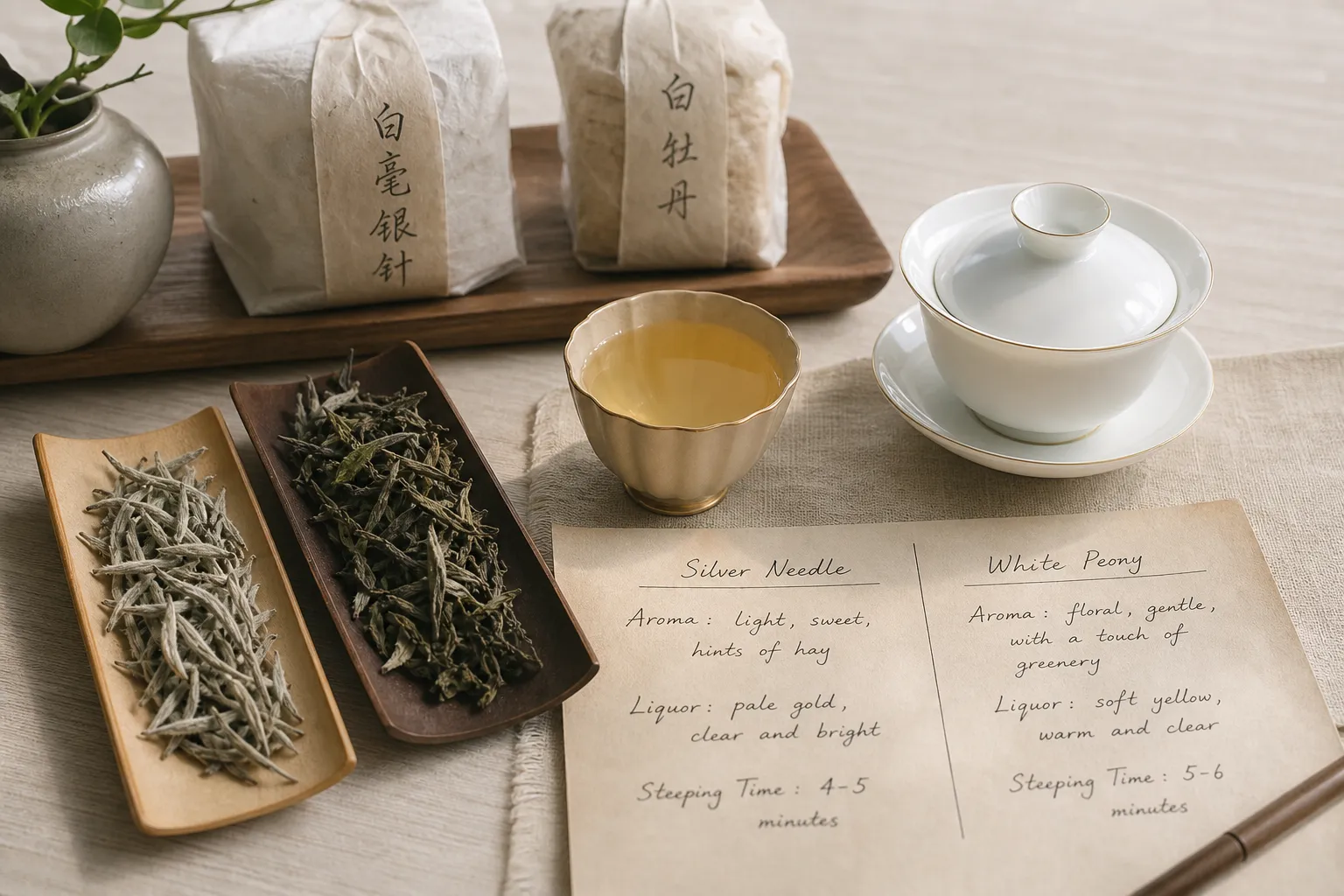
What the site can help with
- Understanding common white tea types such as Silver Needle, White Peony, Gongmei, and Shoumei.
- Comparing leaf appearance, aroma, liquor color, taste, and brewing behavior.
- Reading sourcing, harvest, organic, storage, and aged tea language with caution.
- Building a mindful tea routine as a personal preparation habit, not a promised outcome.
What the site does not provide
- No diagnosis, treatment plan, cure, detox program, or disease-prevention advice.
- No guarantee that white tea will improve sleep, stress, focus, digestion, or any health condition.
- No professional medical, legal, financial, or suitability judgment for individual circumstances.
- No official grading, certification, regulatory, or institutional endorsement of teas, sellers, or claims.
How to use wellness-adjacent mentions
If a guide describes white tea as gentle, calming, low-key, or suitable for a quiet routine, read that as sensory and personal-practice language. Caffeine response, medication interactions, pregnancy considerations, allergies, and health conditions are individual matters. For those questions, use qualified professional advice rather than a tea guide.
For more on how pages are written and revised, see the Editorial Policy. If a page seems to overstate a wellness point or blur a boundary, you can use Reader Support to ask for a review.